

The semiconductor industry plays a critical role in the global economy, and its manufacturing processes are world-renowned for their stringent environmental demands. Traditional HVAC systems are reaching their limits in maintaining ultra-high cleanliness, precise temperature and humidity control, and micro-vibration suppression. Facing this challenge, the industry is actively seeking innovative solutions. The implementation of artificial intelligence (AI) is driving a breakthrough transformation in precision HVAC systems for semiconductor facilities, enabling more accurate and stable operational models.
Extreme Requirements of Semiconductor Manufacturing on Cleanroom HVAC
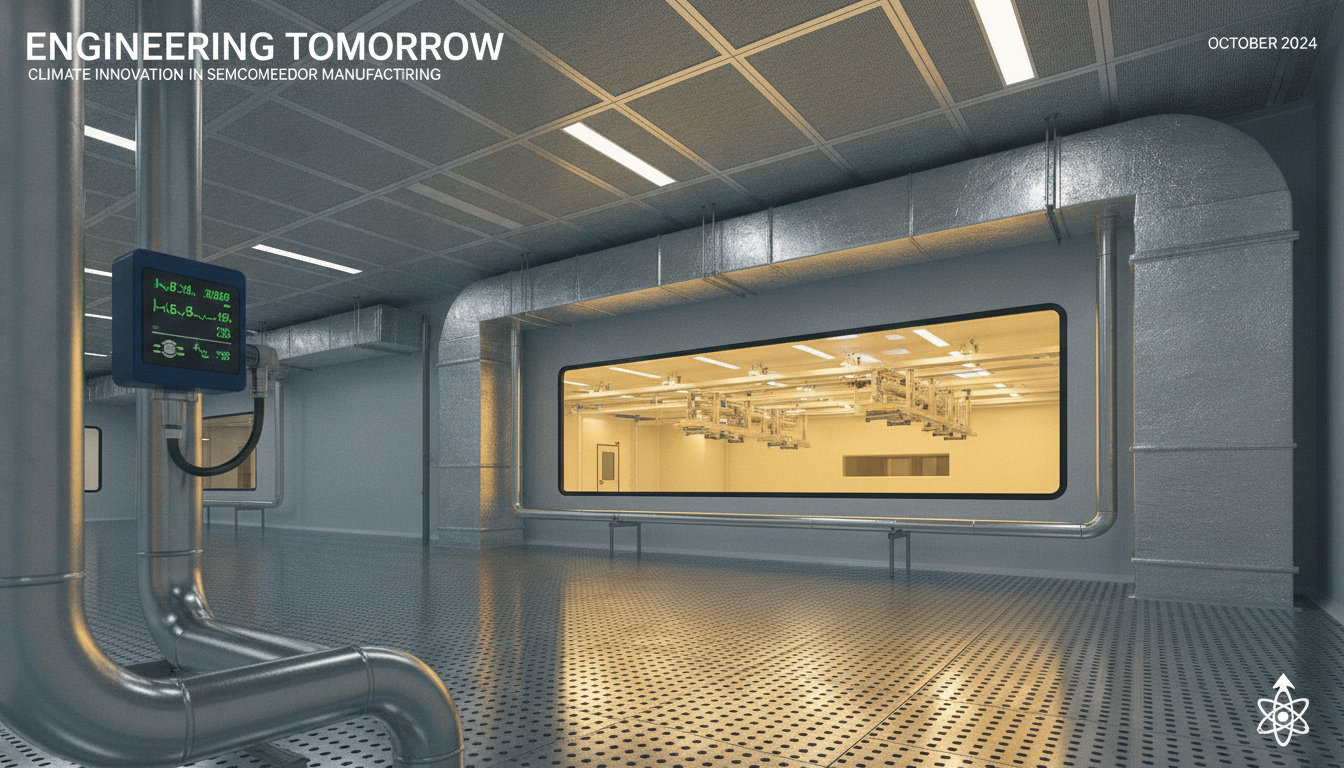
Semiconductor fabrication processes are far more sensitive to environmental conditions than most people realize. Cleanroom HVAC systems must not only maintain air cleanliness with extremely low particle concentrations to prevent micro-contamination on wafers, but also control temperature and humidity within exceptionally narrow tolerances to ensure stable process equipment operation and uncompromised material properties. At the same time, even minor vibrations can interfere with nanoscale lithography and metrology equipment, making the HVAC system’s vibration suppression capabilities equally critical. These complex, extreme environmental control requirements far exceed the operational complexity of standard commercial office buildings or data center HVAC systems.
How AI Addresses the Complex Challenges of Precision HVAC
In response to the rigorous standards that semiconductor fabs demand for ultra-cleanliness, temperature and humidity control, and ultimate stability, AI technology brings revolutionary improvements to fab HVAC systems through powerful data analytics and pattern recognition capabilities. AI can monitor real-time data from hundreds or even thousands of sensors, accurately predicting changes in equipment load, particle concentration fluctuations, and environmental disturbances. It then dynamically adjusts operational strategies for chiller systems, air handling units (AHUs), fans, and pumps. This proactive, adaptive control not only maintains parameters with extreme stability, but also effectively suppresses micro-contamination and vibration propagation, significantly improving process yields.
AI Optimization Strategies for Balancing High Efficiency and Stability
The core strategy of implementing AI in semiconductor precision HVAC systems lies in establishing high-performance predictive models and intelligent decision engines. By leveraging deep learning on historical operational data, process schedules, and external environmental conditions, AI can determine optimal operating modes under varying load scenarios. This prevents the overreaction or latency that traditional control logic often exhibits when responding to rapidly changing process demands. For example, AI can finely adjust variable frequency drive (VFD) settings to optimize airflow and water flow, significantly reducing overall energy consumption while maintaining extreme stability—achieving a dual enhancement in environmental reliability and operational efficiency. Furthermore, AI can provide early warnings for equipment anomalies, enabling predictive maintenance and lowering the risk of unexpected downtime.
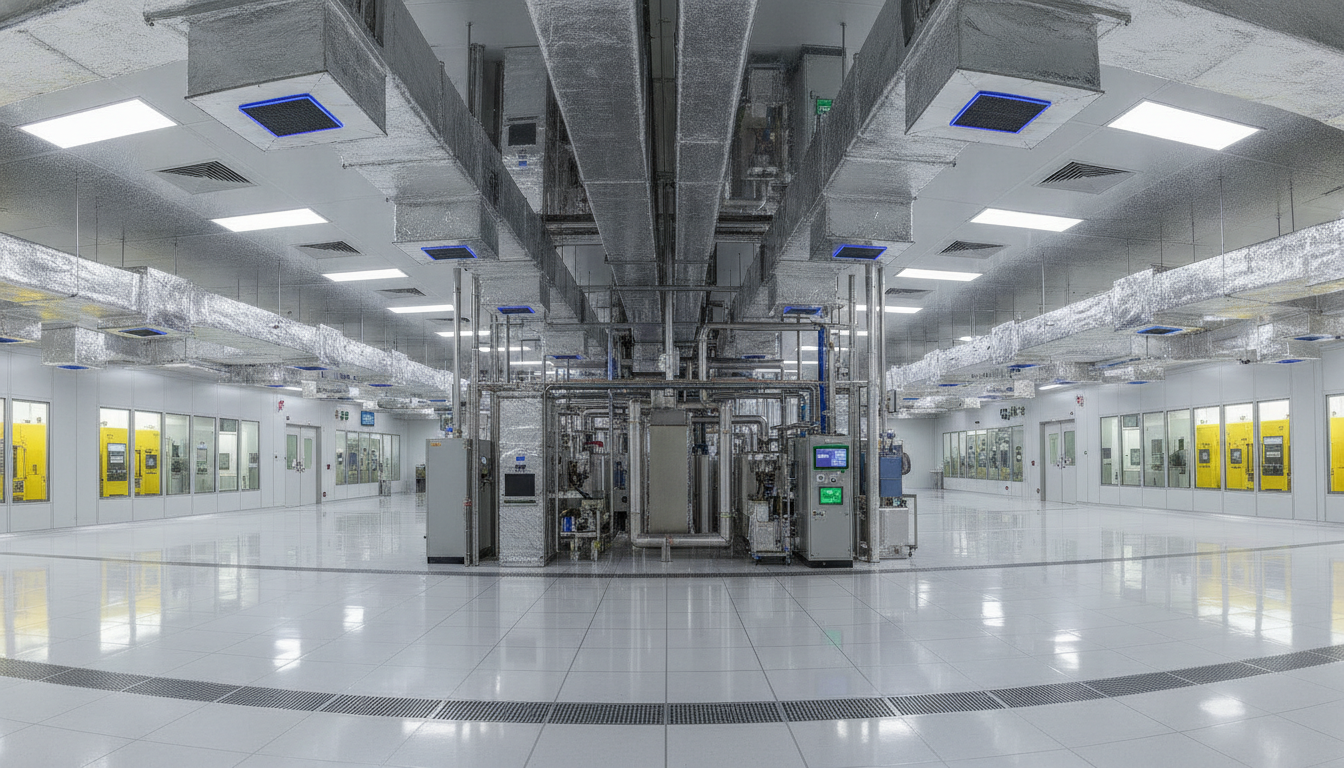
Overall, the application of AI in semiconductor precision HVAC systems is shifting from traditional passive control to proactive prediction and self-optimization. Through data-driven intelligent decision-making, facilities can address the extreme cleanroom challenges of micro-contamination, temperature, humidity, and vibration control more effectively, while empowering high-tech manufacturing facilities to achieve a more resilient, energy-efficient, and forward-looking sustainable operating model.